8 Reasons It’s So Hard to Overcome a Tough Childhood (a response for HSPs)

Building on my two previous posts on adverse childhood events (ACEs) this recent article, by Dr. David Sack, on overcoming tough childhoods is of special relevance to HSPs as we seek to heal from the wounds of our respective pasts.  Highly sensitive people, as we know, experience traumatic events more deeply than those without the trait and may carry the residue of even a single ACE throughout our lives.  Further, the anxiety and depression may be communicated and transmitted intergenerationally leading to a future generation plagued by trauma they never personally experienced.  We HSPs, being deeply conscientious individuals with typically strong moral compasses, not only wish to overcome our ACEs and heal from the past so we may move forward as whole people, we often work very hard on our own children to ensure they do not endure ACEs.

In my experience researching HSPs it is my feeling that half or more of us experienced ACEs that affect us well into our adult lives.  As noted in the following article the fallout from ACEs may be extremely damaging throughout the life course.  I invite those who are interested in this article to follow up by reading my article 8 Ways to Recover from Adverse Childhood Events, a response for HSPs.

“Trauma experienced in childhood has a special ability to wound, especially when it includes emotional, physical or sexual abuse or neglect. The fallout (link is external) echoes through the years and causes negative consequences, such as higher risks of depression, anxiety, bipolar disorder (link is external), PTSD, obesity (link is external), behavioral problems, and health problems such as heart disease. One study (link is external) that followed hundreds of adolescents over time found that 80% of individuals who had been abused as children met the criteria for at least one psychiatric disorder at age 21.

A troubled childhood can also lead a person to alcohol and drug use (link is external) as a way to numb the pain or, conversely, to feel something. Studies (link is external) estimate that up to two-thirds of patients in substance use treatment have childhood histories of sexual, emotional, or physical abuse. There is much to overcome with a troubled childhood, but help is available, and a thorough understanding of what hinders healing can aid the recovery process.

Here are 8 primary reasons why freedom from childhood trauma is difficult:

1 – The traumatized person may be slow to realize the source of their pain.Children have no frame of reference when traumatic experiences occur, so they come to see their reality as normal, especially if their caregivers are the source of their distress. Often, it is only much later—when exposed to healthier families or when raising children of their own—that they see how damaging their childhood was. Unfortunately, the longer a person waits to get help, the tougher it becomes to heal. (If you’ve experienced childhood trauma and wonder where you fall on the spectrum, a test (link is external) provided as part of the Adverse Childhood Experiences (link is external) study can provide insight as well as gauge your risk of developing related health problems.)”

Knowing your ACE is the first step toward better understanding how adverse childhood events may be affecting your life.  Taking the self-test is an awareness raising process in and of itself, as I found when carefully considering each question followed by reflecting on my childhood.  Realizing the source of our pain may be a long process with each of us possessing varying levels of psychological resistance.  Our society also unfairly conditions us to “move beyond” traumatic events without adequately addressing them.  Life, with all of its demands on our time also requires of us a focus on the here and now.  It’s no wonder so many people with ACEs never adequately address the impacts of tough childhoods.   

2 – “Co-occurring issues can mask the true problem. Those who use drugs or alcohol to deal with the pain of childhood trauma (link is external) may become so focused on dealing with their addiction—what is essentially a symptom of the trauma—that they never discover its source. Unless that’s done, however, they are likely to keep cycling in and out of recovery. There’s another complication to trauma-based addiction: Fellow addicts sometimes provide the sense of family missing from a person’s life.”

“Birds of a feather flock together.”  How many times have we heard that?  In the case of addictions it can be all too true with an almost unbreakable social bond between addicts.  Individuals with addictions may be too caught up in the lifestyle required of an addict and the associated financial, legal, and familial consequences to ever reach a point of introspection where awareness is possible.  Do HSPs become addicts?  Of course!  There are no statistics, but HSPs suffer from depression, anxiety, and addictions just like anyone else with resulting negative implications for realization of potential and well-being.  It’s extremely important that we not presume to lump all highly sensitive people together, even though it is human nature to seek out commonalities, because, in fact, we are all quite uniquely individual with highly individualized life paths.  Personal choice becomes a decisive factor on this point as some people succumb to the pain of trauma.

3 – “The damage may also be biological.Scientists now know that childhood trauma can alter brain structure (link is external) and change how certain genes are expressed. In a 2012 Brown University study (link is external), childhood trauma such as abuse or the loss of a parent was found to alter the programming of genes that regulate stress, boosting the risk of developing issues such as anxiety and depression. Trauma-induced brain changes, according to a 2013 study (link is external), have been linked to a diminished ability to moderate negative impulses. Childhood trauma can also affect the brain’s neurotransmitters (link is external), boosting the reward felt when drugs or alcohol are used—and making dependence more likely. These new understandings highlight the difficulties of overcoming childhood trauma, but they are also leading the way to targeted therapies and medications.”

As covered in my blog post 7 Ways Childhood Adversity Changes Your Brain (a response for HSPs) and covered again above there are real biological changes that may occur in the brain and body of HSPs with ACEs.  These changes, in some cases lack of connectivity in the brain, represent real damage that may affect how we deal with stressful situations and life in general.  The damage may be partially to largely reversible, but does require a great deal of personal effort on our parts to understand and appreciate how deeply we may be affected by ACEs.  

4 – “Overcoming the past may mean remembering it. Some find the concept of revisiting the past too painful. Others may be willing but find it impossible to sort out the jumble of childhood impressions. Often all that remains is a floating sense of anxiety. Pain becomes tough to eliminate when its source cannot be pinpointed.”

“Often all that remains is a floating sense of anxiety.”  That anxiety may be quite limiting in our professional, personal, and familial lives.  Who wants to be accompanied by a “floating sense of anxiety” with nebulous roots?  Yet, if we fail to honestly do the work on ourselves and sort out our ACEs as best as we can we resign ourselves to living within a cloud of fear and risk passing that down to our children.  

5 – “Closure can be elusive. Oftentimes, getting those responsible for trauma to accept responsibility for their role in a painful past is impossible. They may no longer be alive by the time the traumatized person comes to understand the source of their distress or feel ready to address it. It can be tough to accept that an abuser will never be held accountable for his or her actions, or that there is no hope of ever developing a healthier relationship.”

Closure can be extremely elusive especially if we wait until mid-life to begin the healing process.  People forget what they’ve done as time obscures their actions and details fade.  Abusers may be unwilling to even acknowledge they, in fact, were abusers as they resort to culturally accepted notions of discipline and expectations of parents, caregivers, and others in past generations.  Often the people who hurt us the most are already old and pale examples of who they once were and seem less threatening in their declining years.  For those of us who have lost a parent early in life, myself at 15, the sense of loss may remain throughout life with no chance to move beyond the relationship status we experienced when the individual passed away.  The healing process, thankfully, is not based on having to confront anyone from our pasts.  We are capable of self-healing and reinvention without any such requirement.  Ultimately closure will depend on how well we are able to come to terms with individuals and situations involved in our ACEs and place them in a context.  

6 – “Answers may be sought in others rather than themselves.Often a person attempts to find in others what was missing from their life in an attempt to fix the past. Or they may become an approval-seeker who will go to any lengths to keep the peace or earn the love of others. Rather than valuing their own needs, they spend their energy trying to become worthy of others’ affection, often enduring further abuse in the process.”

When our self-esteem is damaged so early on we often feel inadequate, unworthy, unloved, even worthless.  When we are in such a state finding approval in others may be easier and more immediately more gratifying than learning to love and value ourselves.  Self-compassion is self-love. 

7 – “Emotions may be closed off. In some cases, caring becomes too dangerous for the child, so they numb themselves to feeling. This not only damages their ability to build healthy relationships, but it also complicates later attempts to access the emotions needed for healing.”

Numbing ourselves to further hurt or injury is a protective instinct, but is dysfunctional when we suppress our deep sense of empathy, one of the strongest aspects of sensory processing sensitivity.  If there’s one issue that precludes HSPs from engaging in any meaningful dialog about their ACEs it is likely emotional numbness.  As mentioned in the quote being able to access the emotions for healing requires that we open ourselves to feeling.  Without feeling we cannot be self-compassionate, self-loving, or be free to find forgiveness or true compassion for imperfect, illogical, unfeeling others.

8 – “It can be hard to silence the inner voices. Children buy into all the things they are told about themselves. If those things are negative—that they are worthless, lazy, stupid, ugly, a failure, or will never measure up to a sibling—it can leave them feeling both unworthy of a better life and powerless to change.”

The inner voices are many in the minds of HSPs!  Many of us have extremely rich inner lives and are very innately creative, curious, and aware of ourselves to an uncomfortable degree.  For those of us who experienced ridicule, degradation, or abuse at the hands of others we often find ourselves having to challenge our feelings and thoughts of low self-esteem, low self-worth, and pessimism.  This is a real and significant obstacle to overcoming ACEs and finding relief from their limiting effects.  As mentioned below any or all of these 8 obstacles to overcoming a tough childhood do not preclude one’s ability to begin the deeply personal work of examining our past.  There is a time and a place that is appropriate for each of us with ACEs to begin this process.  Most of us are likely too involved with the daily demands of life and do a good job of obscuring or minimizing our pain, but it is still there and resurfaces at inconvenient times (such as with the impending holidays), yet the potential benefits to our health, well-being, and ability to function in the world are well worth the effort.

Stefano Cavoretto/Shutterstock
Source: Stefano Cavoretto/Shutterstock

While each of these scenarios  challenges healing, none precludes it. For many, treatment and therapy can dramatically improve quality of life—among them, techniques such as cognitive behavioral therapy (link is external), which can change negative thought patterns, and Eye Movement Desensitization and Reprocessing (EMDR), a form of psychotherapy that can help a person retrieve, process and resolve past traumas.

Additional techniques and medications are on the horizon as research increases our understanding of trauma’s effects on the mind and body. We may one day, for example, be able to simply block bad memories associated with trauma, research (link is external) suggests.

Also encouraging is that researchers (link is external) and therapists are coming to understand that there is a small silver lining to negative experiences: They can sometimes boost resilience. Carrying an ugly burden from the past can weigh a person down, but it can also make them stronger.”

Original article may be found at https://www.psychologytoday.com/blog/where-science-meets-the-steps/201505/8-reasons-its-so-hard-overcome-tough-childhood.

Tracy Cooper, Ph.D. is the author of Thrive: The Highly Sensitive Person and Career, in which he explores, among other aspects, the role of supportive and unsupportive childhoods on career. Cover Thrive

How is Thrive: The Highly Sensitive Person and Career Different? Why You Should Read It.

Cover ThriveMy new book, Thrive: The Highly Sensitive Person and Career has been out now for about three months and, though the feedback has been supportive and encouraging, I think it is worthwhile to point out the ways in which this book is different than other books you might have seen.

#1 Thrive is based on scientifically conducted research.  I conducted two studies that contribute data to this book.  The first utilized interviews with dozens of HSPs from all walks of life.  The second study was a big survey with 1,551 respondents.  The data from both studies provides an empirical basis for all of the chapters in the book.  Some books are written solely from an author’s own viewpoint, which is inherently limited and limiting.

The studies I conducted for Thrive taught me that the issue of career and highly sensitive people is deeply complex with intricate nuances and divergences.  What determines suitability for a particular career for one HSP is not reality for the next.  We HSPs are complex, creative, resilient individuals, but we each have a unique story, which makes writing any book for HSPs quite difficult because everyone is looking for themselves in the book.  By using carefully gathered data and compiling that information into new knowledge we hopefully arrive at a wisdom that is of some value to us all.

#2 Thrive was written by an HSP for whom the issue of career has great meaning.  Sometimes books are written by authors who think addressing a particular topic will yield a best-seller.  I wrote Thrive because I have been deeply troubled over the issue of career in my life and have wrestled with many of the same issues as you may have.  The difference is I have largely moved beyond those issues and taken it upon myself to seek answers for us all because there was no book that was up to date addressing the issues and opportunities of 2015.  Thrive hits all of those issues and is state of the art as of 2015.  In a few years there may be new opportunities and/or challenges and you can bet I will be observing and thinking about how those all affect us.  A second edition will likely be issued in a few years to keep us up to date.

#3 Thrive announces new findings.  Though some things have been implied with regard to HSPs, in Thrive I announce several clear new findings.

  • 86% of the HSPs in my survey identified as a “creative person.”  The link between creativity and HSPs has been implied and assumed in the past, but no real evidence existed until now.  This isn’t mind-shattering, but it does provide a general sense that we, as HSPs, think of ourselves as existing within the realm where divergent thinking, tolerance of ambiguity, curiosity/exploring, and openness to new experience are likely prized.  This understanding may be a revelation to some HSPs.
  • The uniting concept of flow is presented for the first time.  Though flow, which is a concept created by psychologist Mihaly Csikzentmihaly to describe the state one is in when engaged in a challenging task where time becomes lost and the activity becomes worth doing for its own sake is entered, is not new it is the first time it has been used as a way of uniting all HSPs in what can be an uplifting and energizing experience.  We all need flow experiences to keep us growing, confident, and challenged.  Even if we are down on our luck and out of work it is still possible to engage our capacities and rebuild our confidence.  Flow experiences feed into the part of HSPs that craves creative challenge, tangible results, and a sense of accomplishment often missing in today’s working world.
  • Real statistics revealing the most popular careers for HSPs.  My survey of 1,551 HSPs is the first of its kind to explore HSPs and career.  Through the data gathered we now know the relative distributions of HSPs in careers.  Though this does not mean you should simply choose the most popular category because HSPs seem to prefer that it does offer us a view, for the first time, into the choices HSPs make.  One might be tempted to assume that HSPs would all prefer a quiet career with minimal interactions, but that notion would be limiting and not representative of the reality that all HSPs are different.  We now know that HSPs are represented in every career field!  This should help us refrain from the tendency to homogenize HSPs into one limited view.
  • Thrive is written from a pragmatic view.  Some books are guilty of over romanticizing the potential in career for HSPs.  The reality is the work world is ugly, challenging, and demanding with many of us feeling stuck because of financial responsibilities, lack of education, personal difficulties, or fear.  Some might say this smacks of drudgery and despair, but I know the reality to be different because I have been there.  It’s not fair to overly romanticize the possibilities in a world that is inherently unfair.  However, it is useful to explore the potential that exists within every career field for meaningfulness, growth potential, and satisfaction.  I have included a broad discussion of trade work that I think some HSPs would be very well advised to consider.  In that sense I have offered a complete view of work in all its possibilities and not just glamorized a few select ones that are probably not a reality for many.  That’s not to say I am not bullish on the potential of HSPs, indeed, we are the creative class!  It is important, though, to be frank about the actual possibilities in 2015.
  • The emphasis on self-care.  Many books touch on self-care, but what I found through conducting the two studies indicated that we HSPs need to move beyond superficial, token attempts at self-care and begin to embrace it with a spiritual passion.  This might seem to place too much emphasis on the individual at first glance, but I assure you it is a holistic conceptualization of self-care that includes our need to socialize and be in the world.  If we cannot find it within ourselves to take care of our bodies, minds, and hearts there is no way we can avoid stresses like anxiety, depression, and a host of other maladies that limit who and what we can become.  One of the biggest takeaways I want HSPs to remember?  That self-compassion is self-care.  We need to learn to be gentle and loving with ourselves for when we fail to manage ourselves well and end up exhausted and overstimulated.  Thrive opens that conversation with self-care representing such an important topic as to warrant its own book.
  • Thrive provides context.  Many of the books addressing sensory processing sensitivity have been written from a psychological perspective.  This is due to the fact that SPS was developed by a clinical psychologist and further explored by other psychologists.  I differ in that I am a trans-disciplinarian and can speak from several disciplines.  In Thrive I provide a sociological context within which we HSPs live and work.  That context includes gender, social class, and culture, which serve to separate HSPs in many important ways.  As awareness of HSPs continues to rise it is important that we are provided, and seek out, accurate information that will increase our awareness of the real complexities that exist in our lives.  It will be through individuals who are not beholding to any one discipline that we will be able to cover the actual web of complexity.

#4 Thrive, though different in some respects, provides a solid foundation in the area of career that complements other books, while expanding on the discussion in ways only possible through carefully conducted research.  Many times a book is released and that’s the end of it.  Perhaps a few are reissued in a few years as second editions with some minor changes.  Thrive will be the exception with new editions incorporating the latest thinking on careers for HSPs as time progresses.  In fact, I’ve already had a few thoughts for things that were left out of this first edition and that will, no doubt, appeal to some HSPs in ways this book does not.

It is also worth noting that all of my research is privately conducted with no government funding of any kind.  By supporting this book, and spreading the word to others, you are making it possible for new editions to be published and future books on topics of real relevance to HSPs to be written.  If you would really like to help spread the word about Thrive I invite you to leave a review on Amazon.com.

I welcome and invite all constructive feedback regarding future topics you would like to see addressed or expanded on in future editions.

Thrive: The Highly Sensitive Person and Career is available at drtracycooper.com.

Sensitive – The Untold Story: Where You Can See It!

For all those who are interested in viewing the movie here is the link where you can rent or purchase the new documentary movie about highly sensitive people. Note this is for the digital download and not the dvd which will be available in November.  This is a wonderful movie packed with information and hard science. I’m proud to have been a part of this movie and pleased to recommend it to all as a quick introduction to the personality trait that has defined many of our lives.

An explanation from Elaine Aron concerning distribution of the movie:

Dear HSPs,

You can rent or purchase the film about us right here.

It is up through VHX, “the Netflix for Everyman.” Not sure how to do it? You pay to download it onto your computer to own it, or you can rent it. You then watch it on your computer screen, or hook your computer up to your TV. Still unsure? Use the FAQs on the website or ask around for help.

If you want it the old way, on a physical DVD, it will be available before the holidays, with subtitles for several languages. That all takes a little longer.

It happened very suddenly. Will and Diana Harper (the director and producer respectively) and I had discussed how to distribute the movie. There were so many uncertainties, except for the certainty of time delays. We felt impatient and protective at the same time. We ruled out film festivals (about a year and a half to be shown). A network like Discovery or BBC would be nice, but very complicated and at least many months before it would be shown. There’s Netflix, but even that was also going to take at least five months.

Then there is VHX, something new. Instant. Here’s an article on VHX if you are interested (scroll down a little probably).

Meanwhile, this morning Alanis Morissette launched her new website, with many interesting features, but HSPs are there as well and the movie.

I was musing this morning that this is happening on October 12, Columbus Day in the U.S., “the day Christopher Columbus discovered America,” as the saying goes. There are many reasons to hesitate about celebrating that. But the day is symbolic of discovery, yes? And what is the greatest discovery? Ask Walt Whitman in “A Passage to India.” It is self discovery. Or Self-discovery. Everything is ultimately in the Self, from which we act with the greatest wisdom.

So, today many more HSPs and their families will understand this part of life, the trait of sensitivity. May it be a doorway to greater and greater discovery.

Elaine

O we can wait no longer,
We too take ship O soul,
Joyous we too launch out on trackless seas…

– Walt Whitman

“An excellent movie that will change many lives and bring much needed awareness. The world was waiting for you!” -Shawna Lis, Canada “Amazing, wonderful—game changer!” -Kelly O’Laughin, USA “The whole world needs to see this masterpiece.”…
sensitive-theuntoldstory.vhx.tv

The Highly Sensitive Integral Leader (reblogged from ILR)

10/9 – The Highly Sensitive Integral Leader

August-November 2015 / Feature Articles

Tracy M. Cooper, Ph.D.

tracy cooper

Abstract

This paper presents a view of emergence as an integral leader in the community of individuals who have the personality trait sensory processing sensitivity, aka: highly sensitive people or HSPs.  Written from a first person point of view I specifically recount the organic pathway that eventually led to my emergence as a leader in the field of HSP research and leadership as it relates to the release of the documentary movie Sensitive – The Untold Story.

Introduction

“For the meaning of life differs from man to man, from day to day and from hour to hour.  What matters, therefore, is not the meaning of life in general, but rather the specific meaning of a person’s life at a given moment.” – Viktor Frankl.

My journey began in 2008 when I decided to return to college at the age of 43, but, in reality, began much earlier as a young child when I nurtured my sense of boundless curiosity about the workings of the world, and my imagination, with books, comic books, and literally anything with the printed word attached to it.  I even was one of those odd ducks who studied the backs of cereal boxes in the morning, observed students in school with a mixture of interest and trepidation as I felt very keenly the myriad of differences in temperament in each person, and spent a great deal of my time wandering about on my bicycle.  The depth of mind, creativity, and curiosity I possessed innately motivated me to remain forever on the fringes as an onlooker, but rarely a participant.  Partly this was due to my highly sensitive temperament, which predisposed me toward deep thinking, high empathy and emotional responsiveness, a tendency to become overstimulated at times in certain circumstances (like crowded situations), and a nose for subtleties others overlooked in their haste.  But, it would not be until midlife when I knew myself well enough and understood that my inner journey could potentially become woven with my outer journey that I realized my potential as an integral leader with something to say and contribute.

An Integral Beginning

My return to the official college world found me online at Fort Hays State University where I decided to complete a bachelor of general studies.  This choice was made more to acquire the credentials I thought would help me alter the course of my adult life, which had to that point entailed many career changes as my inner world of emotions, quick responsiveness, and need for creative challenge and meaning found no significant place to call “home.”  College felt like home in a sense because the inner world of the introvert I treasure so much could find expression in the coursework with the online format providing a freedom of expression aided by simple time to think before speaking and where my deep conscientiousness could be recognized.

Finding myself with a certain freedom to choose from among many courses from across the liberal arts spectrum I found myself learning about astronomy, sociology, and the history of jazz.  I had had previous experience in college with serious interests in fine art and early attempts at business management and computer information systems.  The latter of which floundered due to sheer boredom and obvious mismatch.  Sociology especially intrigued me as did psychology and I soon explored numerous variations in the inner and outer worlds, but my focus seemed to stray back to my beginnings as the son of blue collar parents from small town Missouri where people seemed to largely remain stagnant in their lives and often fall prey to alcoholism and other vices.  In my innocent view I was at a loss to understand interpersonal issues such as poverty, spousal abuse, pessimism, and depression.  Yet, I had grown up seeing dysfunctional human beings around me who seemed to blend, yet contrast starkly, with the other individuals for whom life seemed to have worked out reasonably well.  As I neared the end of my bachelors program I began to question would it be possible for me to presume that I could pursue a master’s degree?

As the first member of my family to graduate from high school and now to graduate with an undergraduate degree I felt fully the fact that I was in uncharted territory for my genome, yet I seemed to possess confidence in my abilities having experienced great success in my written work throughout my undergraduate degree.  At the commencement ceremony the master of ceremonies asked all of the first generation graduates to stand and be recognized.  I did and felt a sense deep in my heart that what I had achieved was momentous, but was not half of what I was capable of.  I stood in line prior to the ceremony intently studying an individual wearing doctoral robes.  His sleeves had velvet stripes and his hood displayed multicolored stripes denoting his school of study.  Topping off the ensemble was a plush hat with a gorgeous golden tassel.  I knew at that moment I wanted to be that guy!

Intermediate step

“Leadership is lifting a person’s vision to high sights, the raising of a person’s performance to a higher standard, the building of a personality beyond its normal limitations” – Peter Drucker.

Following graduation I had already applied for and was accepted to Fort Hays State University’s Master of Liberal Studies program.  I began the program with renewed confidence, but felt a sense of anxiety that I would be able to indeed match up to the demands.  As it turned out I was exactly the kind of broad-based individual who would do well in such a program.  In the MLS program I chose to follow a social science route and expand on my budding interest in poverty studies and what I came to realize is resilience research.  The coursework called into question many notions I held and I slowly came to an awareness of cultural conditioning, social stratification, and a view through the sociological lens that partially answered some of the burning questions I had about human nature.

By the end of the MLS program I had written a culminating paper on the psychological effects of “escaping” poverty and designed an online class exploring psychosocial dimensions of identity.  In retrospect this period of work allowed me to formulate a tentative vision for the work that would ensue in the Ph.D. program I decided to enter in my hubris and self-acknowledged penchant for academic punishment.  Much to my surprise I also encountered a major health scare at this intervening time when a cancerous tumor was found in my left kidney, which necessitated the removal of that organ entirely.  Fortunately the outlook was excellent due to the tumor being caught at an early stage before it had had a chance to spread.  During that period of extreme anxiety I reflected on my life to date and decided to enroll in that Ph.D. program that I had been contemplating and go for broke.  I felt like the second chance in life I had been granted should be respected and honored by consciously choosing to transcend every self-imposed limitation I had experienced to date.

The Pacific – Pacifica!

Before my master’s hood had even had a chance to gain a wrinkle from being folded and stored I was in a plane for the first time in more than two decades flying to San Francisco, in route to Pacifica, California to attend my first residential intensive at the California Institute of Integral Studies.  Arriving at the Pacific Ocean I breathed in the salt air and absorbed the energetic reality of the magnificent waves as they lapped and crashed against the beach.  I felt energized, happy, and alive!  Meeting my cohort mates, some 40 of them, all gentle, highly intelligent souls, I quickly felt a sense of comfort and belonging I had searched for, but not found in many years.

My fellow Ph.D. students were of all ages, backgrounds, sexual orientations, and religions.  We had everything from a wonderful Franciscan priest to a Universalist reverend to completely spiritual beings with no affiliation.  Interests ranged from education, healthcare, and climate change issues to creative, spiritual, and social justice-oriented topics.  I felt right away that these lovely individuals were integral in a way I had always aspired to.  Many had already built successful careers, some were in career transition, and a few were searchers like myself.  All valued the synergistic relationships that formed buoyed by often fascinating faculty members all very interested in these new arrivals.  It would have been very easy at this point to have crushed all hopes of succeeding in a doctoral program with harsh expectations and arrogant demands, but this was an alternative institution founded initially as an institute of Asian studies eventually becoming an institution devoted to merging the best of East and West while focusing on real-world, cutting edge topics and supporting students existing way out on the perimeter of thought.  The support and liminal spaces created became pivotal in encouraging the next portion of my journey to integral leadership: the topic.

Resilience, Introversion?

“Leaders aren’t born, they are made. And they are made just like anything else, through hard work. And that’s the price we’ll have to pay to achieve that goal, or any goal.” – Vince Lombardi.

If the MLS program at Fort Hays State had cracked open the door to emerging awareness of existing social paradigms the depth and breadth of the doctoral program at CIIS broke it wide open and revealed the inner darkness of a society at war with itself continually shoving the parts of itself it no longer valued into the shadows, only to have them peek out and assert themselves through projection.  We inhaled Jung, breathed out Slater, and imbibed Gebser.  Consciousness, social constructionism, art, and rigorous research courses all fused with deep connections planted and nurtured among this budding community of scholars.  What was this integral studies all about anyway?  How about transdisciplinarity?  Would we live up to what seemed like a monumental task, the crafting of a dissertation?

Chief among those concerns was the development of a topic.  The topic was what everyone asked each other at these week long intensives, “what’s your topic again?”  Usually met by a concise explanation most of us hoped would suffice, or at least sufficiently confuse so as to ward off other questions.  Somewhere in the symbiotic stew of a host of swirling topics I latched onto the personality trait introversion and felt it sink in deeply into my being.  Yes, this was who I was, had always been, and might always be, at least from what I had read.  Somehow, though, it didn’t quite satisfy my curiosity or how I felt I had experienced life.  I knew there was more and found it when a book was recommended to me early on by a fellow student.  The book?  The Highly Sensitive Person, by Dr. Elaine Aron.

At first I recoiled as I read about “cried easily,” and put the book away.  I didn’t cry easily, I felt very deeply and was easily “hurt,” but that usually brought on anger or irritation more than tears.  Did I consider myself a fairly emotion-based person?  Yes, absolutely, and as I reread the book several times I came to embrace what Dr. Aron was explaining about the complexity of this new trait.  Not only was it emotionality, it was also creativity, a depth of mind unusual in the rest of the population, high empathy, and a sensitivity to subtleties.  I knew as an artist that I saw and felt things very differently and had gotten quite in touch with the part of myself that could wander in the woods looking for the twisted tree clinging to a cliff, the asymmetrical boulder or hay bales that suggested figures.  But, the question begged an answer: was I a highly sensitive person and could I live with this reality?

The Highly Sensitive Person – I Am!

After spending some time reflecting on the learning and tentatively contemplating how being an “HSP” had affected my life I came to the comforting, secure realization that I indeed was an HSP.  In fact, I was one hell of an HSP and an INFJ to boot!  This realization explained so much and, for the first time, I no longer questioned “what’s wrong with me?”  I knew there was, in fact, nothing wrong with me.  More so, I felt an inner pull to follow this path to wherever it led, to base my dissertation on this subject as little research existed.  I finally whittled the concept down to something more specific and chose to study HSPs and careers.  The impact of being an HSP in a world built for non-HSPs had trampled me underfoot and passed me by with its conventional expectations of conformity, fulfilling mediocre social roles, and subscribing to a “herd” mentality that had always left me cold and feeling lost.  My role was somewhere beyond convention with a pathway that was murky and unclear, yet passionately compelling and demanding of my life energy.  I knew devoting myself to this “fringe” topic would not wear well in the conventional world, but it pulled me in head and heart with no promises other than much work that had the potential to empower millions of other HSPs worldwide.

Ascending

Finally free after completing comprehensive examinations I dived headlong into a qualitative study of HSPs as I attempted to ascertain how they experienced their careers and how being an HSP had affected their prospects combined with their highly individual choices.  I was astounded to learn how familiar their stories were to my own and how they had struggled with boredom, frustrated creativity, and finding a place in a world of round holes when we were square, hexagonal, and every other shape except round.  The complexity my study participants communicated to me struck my heart deep and I often felt their suffering keenly and knew I had to make this study count, I had to craft something worthy of their trust and soulful narratives.

Ending my study at 35 HSPs I shouldered the mesmerizing task of making sense of 35 printed transcripts laid out throughout a living room now devoted to serious scholarly effort.  Patterns soon emerged suggesting entire categories with each category containing subthemes and complexities I felt a deep responsibility to capture in their essence and vitality.  Now sensing an ownership of this study and foreseeing the potential to write one or more books I carefully heeded the advice Elaine Aron had given me when we had met via Skype and discussed how to construct the most useful study.  Finally arriving at a total of nine distinct themes I wrote the final dissertation and successfully defended it in July of 2014.

By this time I had matured a great deal emotionally from this multiyear journey and emerged as an evolved, passionate scholar with a love of deep research and a mission to create a well-crafted book that would exemplify the results I had surmised in the dissertation, but for a more general audience.

Chrysalis

“A good leader leads the people from above them. A great leader leads the people from within them” – D. Arnold.

 Proudly wearing the three little initials that a classmate had said “suddenly improves everyone’s hearing” I contemplated how to go about assuming my role as a thought leader in the HSP community.  Entering a liminal space post-dissertation I free-floated for a few months contemplating how best to translate academic speak into something more palatable and accessible to an audience who may have no familiarity with psychological terms.  In an ironic twist I found that my coming late to the academic role meant I had not become too entrenched in speaking in obtuse and ambiguous ten dollar words.  Further, I had a penchant for being able to break down complex topics into easily understandable segments aided by my new experience as a college teacher.  Facing small classes of military members on an air base I taught sociology, marriage and family, and diversity courses.  These experiences complemented the doctoral teaching assistant work I had done while still in the Ph.D. program during which time I had formed an identity as a knowledgeable and empathetic “TA” who students knew they could count on for help with their beloved topics.  All of this new experience combined with newfound and hard-won credentials propelled me to finish first in my group and strike out on my own writing “the book.”

“Please feel free to call on me if I can be of service to the HSP community,” I had said to Elaine Aron.  She responded a few months later with “we want to interview you for the new documentary movie we are making about HSPs!”  In November of 2014 I found myself again on a plane bound for San Francisco and an interview with the originator of the sensory processing sensitivity trait.  Would I freeze up?  Would I come across as completely weird?  What was I doing?  There is a certain anxiety that combines with a rush that comes from taking on big and scary new endeavors.  I had learned that, in addition to being a highly sensitive person, I was also a high sensation seeking person.  Far from being a thrill and adventure seeker I identified more deeply with experience and novelty seeking, a certain amount of disinhibition and a strong susceptibility toward boredom.  These combining, sometimes overlapping traits, fueled me with a twin need for the rush of doing something new combined with a cautionary instinct to think it out well and observe, but now was the time to emerge from the shadows and stand up as what I now knew myself to be: a highly sensitive, high sensation seeking man with something to say!

Interview

“You gain strength, courage and confidence by every experience in which you really stop to look fear in the face. You must do the thing you think you cannot do.” – Eleanor Roosevelt.

“Tracy, would you talk about HSPs and careers?”  Elaine Aron asked from one side of the camera, shielded from the extremely bright lights.  I was off and running!  As if in a dream the words flowed out from somewhere and amazingly they sounded credible, even to my ears.  “Tracy, you conducted a follow up study after your dissertation study, is that right?” Elaine asked.  “Yes.”  From behind the camera a conscientious Will Harper, the director of the move coached, “Rather than a yes/no answer, would you say more about it so it’s a complete answer?”  Aha, of course!  Retake, “Tracy, you conducted a follow up study after your dissertation study, is that right?” Elaine asked again.  The new explanation flowed out as if prerecorded and delivered by a practiced and confident public speaker as did the subsequent 60 minutes of questions and answers.

Lunch with Elaine

Post interview it was decided that Elaine and I would HSP Career bookretire upstairs to a dining room with a view of Tiburon, San Francisco Bay and, on a clear day, the Golden Gate Bridge.  On this day it was foggy and pouring rain incessantly which left Elaine and I inside discussing intently the research I had conducted over a cheese sandwich she shared with me, a mix of whole nuts, and fruit.  I smiled silently to myself as I enjoyed this interaction knowing that I had arrived at a point of respectability in the world’s eye that my father, who had passed when I was 15 and he 49, would have been elated by.

Elaine was warm and genuine and supremely engaging.  I felt very privileged to be there representing this work and discussing ways to move ahead in the research and personally.  I realized that my next task was to write that book and get it out before this new movie premiered.  Over the winter and into the spring I struggled with writing chapter by chapter, sometimes reordering the structure and, at times, deleting passages entirely.  Finally hitting a stride in my writing I plowed through to the end and thereafter spent weeks tweaking words and thoughts, often adding material only apparent in retrospect.  Thrive: The Highly Sensitive Person and Career was released in July of 2015.

The Premier of Sensitive – The Untold Story

September 10th, 2015 – Venue: The Legion of Honor Museum – San Francisco, California.

My birthday!  I celebrated 49 years and awaited the premier of this long-awaited film from my home in Ozark, Missouri.  My wife, Lisa, and I would view the premier via a livestream from the theater.  The event begins with preshow interviews with researchers and others who appeared in the movie.  The movie is prefaced by a quick introduction by Elaine after which the lights are dimmed and the movie flickers onto the screen to an audience of expectant HSPs from around the world in addition to the 350 people in the theater.  As each aspect of high sensitivity is discussed along with supporting science I reflect on the role I have assumed and the long journey is had been to get here.  When my first speaking part pops up on the screen after some 30 minutes I feel a rush of sensation as this shy, sensitive, creative, always on the outside observer is suddenly front and center and representing what he knows.  I am speechless, all smiles, and filled with emotion as my three speaking parts eventually unfold on the screen and the movie concludes.

Integral Leadership for the HSP

“Make the most of your regrets; never smother your sorrow, but tend and cherish it till it comes to have a separate and integral interest.  To regret deeply is to live afresh.” – Henry Thoreau.

Following the premier of the movie I spent several days considering the implications of how millions of HSPs and non-HSPs will be affected by this wonderful and informative movie.  I reflect on my new role as spokesperson for this trait and advocate for those who are still on the pathway to better understanding themselves.  I have been consulting with HSPs for many months now on career issues, teaching more college classes, this time at Baker University in a master of liberal arts program, and moving forward with ideas for new research and new books.  I feel a critical mass of three books that need to be brought into being, each with supporting new, original research.  The first, on HSPs and career, is already out and in the minds of HSPs, the second is already underway and will address the high sensation seeking highly sensitive person, the third?  The third book will directly address the highly sensitive male and provide a needed resource for making it acceptable to be highly sensitive and male in a society that does not seem to value sensitivity and espouses an extremely restrictive, unhealthy notion of what it means to be a male.

Reflecting on the becoming of integral leadership I feel there are several key aspects of being an HSP that translate quite successfully to leadership that encompasses and honors, both, the deep inner life and an outer world of interacting individuals each with unique potentialities and temperaments.  The highly sensitive leader is:

  • Interested in developing the leadership capacity of each person through non-hierarchical, self-determining approaches where appropriate.
  • Deeply empathetic with an intrinsic ability to “read” the emotions of another person and “feel’ when an individual or group is balanced and at ease.
  • A superb planner owing to the deep thinking consisting of a reflective and contemplative capacity that explores ambiguity, ascertains options, and creatively surmises long-term implications.
  • Notices subtle details others might miss entirely that uniquely qualify HSP leaders as meticulous, deeply conscientious individuals with a keen eye for detail.
  • Innately creative in ways that go far beyond producing an end product as creativity permeates all they do.
  • Focused on building the capacity of the community of individuals in their employ as well as continued, holistic development of their own inner person.
  • Concerned with fairness in all business dealings, from employee compensation to customer service, and ethical business practices.
  • Interested in the more complex implications of doing business in a way that solves real-world problems and raises the consciousness of all people and is not focused on the mere stockpiling of profit.
  • Committed to engaging themselves in meaningful projects with real impact and importance in the world.
  • Very likely your most conscientious employee.

“Great leaders are almost always great simplifiers, who can cut through argument, debate, and doubt to offer a solution everybody can understand.” – Colin Powell.

The highly sensitive leader is not:

  • A strict hierarchical leader interested in leading from above.
  • Focused solely on the profit motive or exploitation of natural and human resources.
  • Interested in engaging their significant capacities in trivial or superficial projects or working with superficial individuals.
  • Suited to work that is repetitive, boring, or monotonous.
  • The kind of individual one wants to attempt to exploit or manipulate as HSPs pick up on subtle energies much faster than others and may react accordingly.
  • A stagnant leader one assigns to a no-growth position and expects them to remain.
  • Interested in poorly planned projects or hasty decisions not based on reasonable and rational thought processes. HSPs may be deeply intuitive and prefer to build in long term strategies.
  • The sort of individual one demands insights from on an instant basis. HSPs need time and space to think, reflect, and consider carefully, but when they have worked through an issue you can be assured they will have the deepest insights.
  • The extraverted social butterfly you might like in all of your managers, but when they do speak you should listen.
  • Interested in being the center of attention. This is overstimulating for many HSPs and they prefer to work somewhat behind the scenes.  This is not always the case and many HSPs do extremely well as “performers.”  Remember, though, if they perform they will very likely need downtime to recharge.

“Treat people as if they were what they ought to be, and you help them become what they are capable of being.” – Johann Wolfgang von Goethe.

Some of the deepest thinkers and innovators have been presumed to have been highly sensitive people, based on the historical record.   A highly sensitive integral leader would combine a deep self-knowledge with a wisely considered and commiserate breadth of knowledge about the external world in all its grand complexities.  HSPs, in a real sense, are the ultimate integral practitioners because of our deep, rich inner lives, compassion for others, sense of mission usually resulting in committed conscientiousness, and innate creative dispositions based in an intrinsic sense of curiosity about the world.

“A leader is best when people barely know he exists. When his work is done, his aim fulfilled, they will say: we did it ourselves.” Lao Tzu.

The highly sensitive integral leader is uniquely poised to make an impact on the 21st century as the changing cultural landscape often values complexity, inclusiveness, and greater equality for all.  In my experiences as an emerging highly sensitive integral leader in the HSP global community I often pose the question to myself “what is the goal in raising awareness about HSPs in the world?”  My inner reply is because it seems obvious to me when I view world events that too many groups are still constrained and controlled by consciousness-destroying ideologies and ways of being designed to perpetuate unequal, unfair, and unsustainable economic and social models.  The goal, then, in raising awareness of the personality trait sensory processing sensitivity is to help others become empowered in personal ways that can lead to greater well-being that can spread to our families, our communities, and, to a greater extent, the world.

When we leave behind oppressive socially constructed roles and modes of being and begin to decide consciously who and what we will represent in this brief moment of life we begin to truly live and cease to impose the will of controlling ideologies on our brothers and sisters.  If being a highly sensitive integral leader should mean anything it’s embodying a visionary, compassionate, creative, self-created way of being that is autotelic, synergistic, and in line with enhancing and building the inner and outer capacities of others to encourage strong, equitable communities where all individuals may reach their full human potential.

About the Author

Dr. Tracy Cooper is the author of The Highly Sensitive Person and Career, an educator, and a consultant helping highly sensitive people in career transition at his web site: drtracycooper.com.  He holds a Ph.D. from the California Institute of Integral Studies in Transformative Studies and is currently working on a new book addressing the high sensation seeking highly sensitive person.


8 Ways to Recover From Post Childhood Adversity Syndrome (A response for HSPs)

Recovery from ACEs (Adverse Childhood Experiences).  Is it possible?  Is it practical?  Why not just let sleeping dogs lie?  Many of us who suffered ACEs  (myself incluhand-plant-300x225ded with seven ACEs) feel the effects of childhood trauma, neglect, and abuse in the form of increased risk of depression, anxiety, autoimmune diseases, fibromyalgia, cancers, chronic fatigue, and many others.  Further, ACEs actually alter an individual’s DNA in real ways, as previously covered in my article 7 Ways Childhood Adversity Changes Your Brain (a response for HSPs).  In that article I listed three main points, as outlined by author Donna Jackson Nakazawa.

First,

  • individuals with four or more ACE’s were twice as likely to be diagnosed with cancer than those with no ACE’s.

Secondly,

  • for a person with a score of four or more ACE’s the risk of depression was 460% more likely than for those with zero ACE’s.

Lastly,

  • an individual with six or more ACE’s might expect to have their life shortened by nearly 20 years. 

If that wasn’t enough to capture our attention and demand that we focus on this issue I also covered Nakazawa’s review of ACE’s effects on the brain including:

  • Epigenetic shifts in which the stress response is set to “high” for life through alterations in gene markers in the brain.
  • Size and shape of the brain with a shrunken hippocampus leading to overreactions to minor stresses in life.
  • Neural pruning in which chronic neuroinflammation owing to ACE’s predispose us to further issues as we face the adult world, which is often unforgiving of any individual who cannot simply “leave it at the door.”  Many HSPs suffer in quiet and, in fact, may be suffering from inflammation in the systems of the body.
  • Telomeres, which are the end caps of DNA strands.  In those with ACEs telomeres are less able to prevent the unraveling of DNA strands, potentially leading to disease and premature aging.
  • Default Mode Network in the brain experiences less connectivity leading the individual to be less capable of discerning what is relevant and what is not, often resulting in serious overreactions.
  • Brain-Body Pathway – systemic, chronic inflammation from head to toe with lessened effectiveness of immune system responses.
  • Brain Connectivity weakened with less connectivity between the prefrontal cortex and the hippocampus leading to greater levels of fear and anxiety in everyday situations.

Now I would like to cover a separate article by Nakazawa in lieu of publication of her followup to this article and relate it to HSPs.  The article is titled 8 Ways to Recover from Post Childhood Adversity Syndrome and details a number of strategies that I think are worthy of consideration for HSPs.

Nakazawa observes “Science tells us that biology does not have to be destiny. ACEs can last a lifetime but they don’t have to. We can reboot our brains. Even if we have been set on high reactive mode for decades or a lifetime, we can still dial it down. We can respond to life’s inevitable stressors more appropriately and shift away from an overactive inflammatory response. We can become neurobiologically resilient. We can turn bad epigenetics into good epigenetics and rescue ourselves.”  With this optimistic view let’s look at each of her 8 strategies and relate them to HSPs.

1. Take the ACE Questionnaire.  The ACE questionnaire will tell you your ACE score and, thus your risk factor for any or all of the factors mentioned above.  Vincent Felitti, co-founder of the ACE Study “When we make it okay to talk about what happened, it removes the power that secrecy so often has.”  By our willingness to address our ACEs directly we are removing their emotional power over us and beginning the journey to healing.  For HSPs I cannot imagine a better thing to do for ourselves if we suffered ACEs in childhood, and many did judging by my and other researcher’s statistics.  It’s true that many people would rather the past stay in the past, as it were, and move on with life attempting to forget and forgive, but the aforementioned lifelong effects of ACEs may prevent our doing just that as we deal with the lingering health-related and emotional impacts of ACEs.

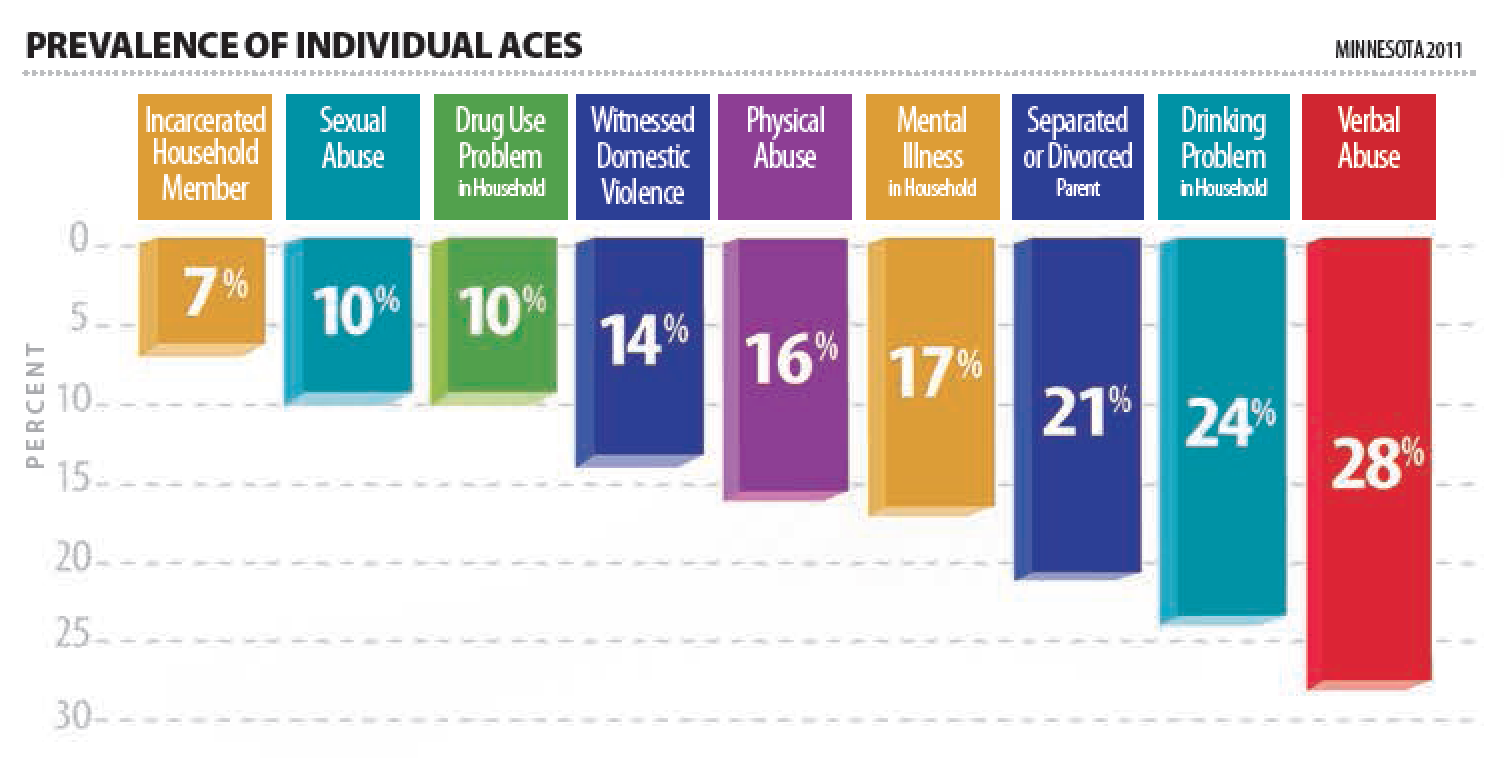
I, for one, have had cancer at a young age (44) and was lucky enough to catch it early.  Whether the cancer was due to ACEs we will never know, but anything we can consciously do that will improve our health, including our emotional health, is certainly worthy of our time and attention.  Take the ACE questionnaire if you have not and know your score.ACE_Prevelance

2. Begin Writing to Heal.

“Think about writing down your story of childhood adversity, using a technique psychologists call “writing to heal.” James Pennebaker, professor of psychology at the University of Texas, Austin, developed this assignment, which demonstrates the effects of writing as a healing modality. He suggests: “Over the next four days, write down your deepest emotions and thoughts about the emotional upheaval that has been influencing your life the most. In your writing, really let go and explore the event and how it has affected you. You might tie this experience to your childhood, your relationship with your parents, people you have loved or love now…Write continuously for twenty minutes a day.”

When Pennebaker had students complete this assignment, their grades went up. When adults wrote to heal, they made fewer doctors’ visits and demonstrated changes in their immune function. The exercise of writing about your secrets, even if you destroy what you’ve written afterward, has been shown to have positive health effects (link is external).”

Keeping a journal can be a potentially useful way to practice self-therapy, while not having to divulge these intimate details to a stranger.  I suggest taking Pennebaker’s advice and writing for at least 20 minutes per day detailing your ACEs.  If you are middle-aged (like me) you will likely have some perspective on the event/s and greater wisdom than you might think possible.  Most of us, by middle age, have raised children of our own and lived through many trying experiences and likely have a deep, rich perspective regarding how we were parented.  Writing that out can be very therapeutic with real benefits.  Give it a try!

3. Practice Mindfulness Meditation.

“A growing body of research indicates that individuals who’ve practiced mindfulness meditation and Mindfulness-Based Stress Reduction (MBSR) show an increase in gray matter (link is external) in the same parts of the brain that are damaged by Adverse Childhood Experiences and shifts in genes (link is external) that regulate their physiological stress response. According to Trish Magyari, LCPC, a mindfulness-based psychotherapist and researcher who specializes in trauma and illness, adults suffering from PTSD due to childhood sexual abuse who took part in a “trauma-sensitive” MBSR program, had less anxiety and depression, and demonstrated fewer PTSD symptoms, even two years after taking the course.

Many meditation centers offer MBSR classes and retreats, but you can practice anytime in your own home. Choose a time and place to focus on your breath as it enters and leaves your nostrils; the rise and fall of your chest; the sensations in your hands or through the whole body; or sounds within or around you. If you get distracted, just come back to your anchor. Here (link is external) are some tips from Tara Brach, psychologist and meditation teacher, to get you started on your mindfulness journey.

There are many medications you can take that dampen the sympathetic nervous system (which ramps up your stress response when you come into contact with a stressor), but there aren’t any medications that boost the parasympathetic nervous system (which helps to calm your body down after the stressor has passed). Your breath is the best natural calming treatment—and it has no side effects.”

The practice of mindfulness has become something of a fad in the US, with good and bad press depending on its application, but the effects of developing and maintaining a contemplative practice are solid and HSPs should work assiduously to experiment with various practices to find one/s that work for them.  Acknowledging that many HSPs may find it difficult to “calm the mind” due to the deep extent to which we process all experience combined with cultural conditioning to withstand a near constant stream of bombardment to our senses I suggest walking mediation or some other form of contemplative practice that serves the purpose of quieting your mind and focusing just on the most basic of life processes (the breath).

I would add to this advice that HSPs need to go beyond calming the mind to practicing a holistic self-care practice that is as deeply embedded as any spiritual practice.  Very often we live far out of touch with our bodies and reside only in our minds unaware of bodily systems, until something breaks down.  My advice is: address your diet, remove items like refined sugars, salt, and highly processed foods as much as practical.  Get enough rest (sleep) each night, and associate with quality individuals who uplift you on a regular basis.  This may be one or two close friends (probably normal and the top limit for many HSPs).  Concurrent with positive associations with others work to remove negative individuals, narcissists, bullies, and other deleterious people from your life.  You don’t need them if you have suffered ACEs and, frankly, life is far too short to waste our precious time on more suffering.

4. Yoga

“When children face ACEs, they often store decades of physical tension from a fight, flight, or freeze state of mind in their bodies. PET scans (link is external) show that yoga decreases blood flow to the amygdala, the brain’s alarm center, and increases blood flow to the frontal lobe and prefrontal cortex, which help us to react to stressors with a greater sense of equanimity. Yoga has also be found to increase levels of GABA (link is external)—or gamma-aminobutyric acid—a chemical that improves brain function, promotes calm, and helps to protect us against depression and anxiety.”

Yoga, for those who do not know, is much more than the physical exercise poses so popular now.  Yoga has been practiced for thousands of years and is primarily intended as a means of attaining a continuous state of peace of mind so one might truly experience oneself and unite with the universal. In Western countries Hatha yoga is primarily practiced for its physical benefits, but also for its inherent spirituality. For HSPs, developing a yoga practice might be ideal and is one that can be started at a lower level of exertion working up to more advanced poses.  There have been some incredible health turnarounds in people who were formerly disabled.  Too often we accept our health situation, but our bodies will only respond to as much as we demand from them.

Though yoga is one useful strategy I advocate that ANY form of exercise is going to likely yield similar results if practiced regularly.  Our bodies are designed to move.  There is no cure for many health issues except to get out and start moving!  For those of us with ACEs the effects of physical exercise go far beyond healing our bodies and brains to improving our self-esteem, personal confidence, self-efficacy, developing an optimistic explanatory style, and improving our sex lives as our bodies become more “in tune.”

5. Therapy

“Sometimes, the long-lasting effects of childhood trauma are just too great to tackle on our own. In these cases, says Jack Kornfield, (link is external)psychologist and meditation teacher, “meditation is not always enough.” We need to bring unresolved issues into a therapeutic relationship, and get back-up in unpacking the past. When we partner with a skilled therapist to address the adversity we may have faced decades ago, those negative memories become paired with the positive experience of being seen by someone who accepts us as we are—and a new window to healing opens.

Part of the power of therapy lies in allowing ourselves, finally, to form an attachment to a safe person. A therapist’s unconditional acceptance helps us to modify the circuits in our brain that tell us that we can’t trust anyone, and grow new, healthier neural connections. It can also help us to heal the underlying, cellular damage of traumatic stress, down to our DNA. In one study (link is external), patients who underwent therapy showed changes in the integrity of their genome—even a year after their regular sessions ended.”

Therapy with the right therapist can be very helpful, even life changing, but with the wrong therapist a total waste of time.  Few psychologists/psychiatrists acknowledge or appreciate the role sensory processing sensitivity may play in the lives of HSPs.  The number is increasing as awareness increases, but finding the right relationship with a trusted therapist can be a tricky, and frustrating, experience.  That being said, working through ACEs with a skilled therapist can the quick way to healing.  It is true we can work on ourselves through reading and researching, but a trained and experienced psychologist, or other therapist, has likely seen hundreds of people with similar issues and knows how to help you best.

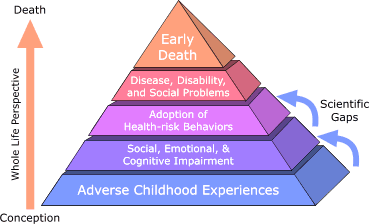
Should you be on psychotropic medications?  That will vary with each person.  Some will benefit, while others may find the side effects to be too troubling.  Are they worth experimenting with to ascertain their potential benefit?  Possibly, but proceed with extreme caution as many drugs are highly addictive and difficult to monitor.  My advice would be to consult with a skilled psychiatrist regarding these types of medications and, even then, to remain on them only as long as beneficial.  Psychotropic medications are not meant to be utilized for a lifetime, yet many are on them for better or worse.  It’s an individual decision, of course, and one that should be made in concert with the best psychologist, family doctor, and psychiatrist available.  Complement that with an awareness on the part of your loved ones regarding your planned course of medication therapy so they know and understand how your behavior and demeanor might change.  As with any medication you must take them as directed or they will not reach full effectiveness the way your doctor intended.  ace_pyramid_wotext.127135420_std

6. EEG Neurofeedback

“Electroencephalographic (EEG) Neurofeedback is a clinical approach to healing childhood trauma in which patients learn to influence their thoughts and feelings by watching their brain’s electrical activity in real-time, on a laptop screen. Someone hooked up to the computer via electrodes on his scalp might see an image of a field; when his brain is under-activated in a key area, the field, which changes in response to neural activity, may appear to be muddy and gray, the flowers wilted; but when that area of the brain reactivates, it triggers the flowers to burst into color and birds to sing. With practice, the patient learns to initiate certain thought patterns that lead to neural activity associated with pleasant images and sounds.

You might think of a licensed EEG Neurofeedback therapist as a musical conductor, who’s trying to get different parts of the orchestra to play a little more softly in some cases, and a little louder in others, in order to achieve harmony. After just one EEG Neurofeedback session, patients showed greater neural connectivity (link is external) and improved emotional resilience, making it a compelling option for those who’ve suffered the long-lasting effects of chronic, unpredictable stress in childhood.”

This option, for HSPs, may be intriguing, but the availability of EEG Neurofeedback may be an issue for many.  In addition to the potentiality inherent in the EEG Neurofeedback technique I suggest that, once an individual has developed and is maintaining a strong self-care practice (including a contemplative practice) it is likely the ability to control overreactions and calm the mind will increase commensurately.  Many times, for HSPs, we feel the emotion flaring as soon as we are stimulated, the difference is in our ability to quiet the intensity of the emotion, which is often anger.  Through the practices outlined thus far I think it is likely a dedicated practitioner of self-care will have some ability, over and above a person who has not developed a contemplative practice or engaged in self-care to the extent I have advocated for, to moderate the intensity of a given emotion and self-sooth.  Learning to observe an emotion without reacting, as often advocated in mindfulness practices, is a difficult process, but well worth the effort.

7. EMDR Therapy

“Eye Movement Desensitization and Reprocessing (EMDR) is a potent form of psychotherapy that helps individuals to remember difficult experiences safely and relate those memories in ways that no longer cause pain in the present. Here’s how it works: EMDR-certified therapists help patients to trigger painful emotions. As these emotions lead the patients to recall specific difficult experiences, they are asked to shift their gaze back and forth rapidly, often by following a pattern of lights or a wand that moves from right to left, right to left, in a movement that simulates the healing action of REM sleep.

The repetitive directing of attention in EMDR induces a neurobiological state that helps the brain to re-integrate neural connections that have been dysregulated by chronic, unpredictable stress and past experiences. This re-integration can, in turn, lead to a reduction in the episodic, traumatic memories (link is external) we store in the hippocampus, and downshift the amygdala’s activity. Other studies have shown that EMDR increases the volume of the hippocampus.

EMDR therapy has been endorsed by the World Health Organization as one of only two forms of psychotherapy for children and adults in natural disasters and war settings.”

EMDR seems to offer great promise for HSPs, though it may also prove to be quite traumatic in reliving memories the risk is likely worth the effort if we can reverse some of the damage to key area s of the brain and improve well-functioning.  Again, the locating of a trusted therapist would be crucial to such an undertaking because we HSPs experience the emotions associated with ACEs more deeply and it feels very vulnerable to expose ourselves in such ways.  Knowing the individual we are working with understands sensory processing sensitivity and our likely responses to therapies will help make the process/es more useful and less frustrating.

8. Rally Community Healing

‘Often, ACEs stem from bad relationships—neglectful relatives, schoolyard bullies, abusive partners—but the right kinds of relationships can help to make us whole again. When we find people who support us, when we feel “tended and befriended,” our bodies and brains have a better shot at healing. Research has found that having strong social ties (link is external) improves outcomes for women with breast cancer, multiple sclerosis, and other diseases. In part, that’s because positive interactions with others boost our production of oxytocin, a “feel-good” hormone that dials down the inflammatory stress response. If you’re at a loss for ways to connect, try a mindfulness meditation community or an MBSR class, or pass along the ACE Questionnaire to family and friends to spark important, meaningful conversations.”

Mentioned before, but the role of positive others in our lives plays a significant role that cannot be overemphasized to HSPs.  Though most of us need a good deal of alone time to recharge and process we also need to be bonded to trusted others.  Finding such friends is perhaps easier said than done, but the rewards are immediate in the body.  Creating and nurturing healthy relationships is, and should be, a key strategy on our path to healing from ACEs.

Though this article can only hope to begin the conversation surrounding ACEs and HSPs it is at least clear that there is hope in mitigating the lingering effects of ACEs.  As more strategies become available I will, of course, pass them along to all HSPs with my considered thoughts on each technique.  For now, the above mentioned strategies provide us with a starting point each of us should explore as we begin our oath to healing and, eventually, to thriving.

Tracy Cooper, Ph.D. is the author of Thrive: The Highly Sensitive Person and Career.  Dr. Cooper Cover Thriveappeared in the new documentary movie Sensitive – The Untold Story and provides consulting services for HSPs on the topics of career and the sensation seeking HSP.  His web site may be found at drtracycooper.com.

7 Ways Childhood Adversity Changes Your Brain (a response for HSPs)

In my most recent book Thrive: The Highly Sensitive Person and Career I included an entire chapter Cover Thriveon the lingering effects of unsupportive or negative childhood environments.  Highly sensitive people are especially susceptible to being more deeply affected by negativity in childhood than others due to the depth to which we process this non-support or non-acceptance.  Moving beyond non-acceptance of sensitivity we have to include abuse, neglect, trauma, and conflict as being especially harmful for the HSP.  The recent article “7 Ways Adversity Changes Your Brain,” by Donna Jackson Nakazawa, looks at the ways childhood trauma and adversity actually change the connections in the brain and alter genes.  In this article I would like to address the most salient points as they apply to HSPs.

First, we need to know our Adverse Childhood Events, or ACE, score.  I was able to find the self-test at the following link http://www.acestudy.org/ace_score.  Click on the appropriate language score calculator and answer the questions, with a 1 for every yes and O for no.  Total your score and that is your ACE score, but what does it mean?  In a nutshell, the more ACE’s one has the greater a number of health risks one might endure.

There is real science behind this with one study comprising some 17,000 individuals.  What they found was that nearly two-thirds of the participants had one or more ACE’s from their childhoods.  ACE’s being defined as going beyond mere childhood disappointments or struggles and encompassing stress-inducing events capable of long-term effects.

For one

  • individuals with four or more ACE’s were twice as likely to be diagnosed with cancer than those with no ACE’s.

Secondly,

  • for a person with a score of four or more ACE’s the risk of depression was 460% more likely than for those with zero ACE’s.

Lastly,

  • an individual with six or more ACE’s might expect to have their life shortened by nearly 20 years. 

More specifically, Nakazawa explained that there may be at least seven changes or alterations to genes or brain connectivity.  Let’s examine each one carefully.

  1. Epigenetic Shifts
    When we’re thrust over and over again into stress-inducing situations during childhood or adolescence, our physiological stress response shifts into overdrive, and we lose the ability to respond appropriately and effectively to future stressors—10, 20, even 30 years later. This happens due to a process known as gene methylation, in which small chemical markers, or methyl groups, adhere to the genes involved in regulating the stress response, and prevent these genes from doing their jobs. As the function of these genes is altered, the stress response becomes re-set on “high” for life, promoting inflammation and disease.This can make us more likely to over-react to the everyday stressors we meet in our adult life—an unexpected bill, a disagreement with a spouse, or a car that swerves in front of us on the highway, creating more inflammation. This, in turn, predisposes (link is external) us to a host of chronic conditions, including autoimmune disease, heart disease, cancer, and depression.

    Indeed, Yale researchers recently found that children who’d faced chronic, toxic stress showed changes “across the entire genome,” in genes that not only oversee the stress response (link is external), but also in genes implicated in a wide array of adult diseases (link is external). This new research on early emotional trauma, epigenetic changes, and adult physical disease breaks down longstanding delineations between what the medical community has long seen as “physical” disease versus what is “mental” or “emotional.”

These epigenetic shifts resetting our stress response to “high” for life obviously overloads a sensitive HSP’s system and predisposes us toward anxiety, depression, and frustrations at the smallest things in life.  When we are altered in such a way that our reactions are always on “high” there is no way we can expect to live a normal life because most of us experience one or more sources of stress on a daily basis.  For the HSP an exaggerated stress response would present a double burden given that we are already hard-wired to notice subtleties, be emotionally responsive and deeply empathetic, experience overstimulation in some circumstances, and process all experience more deeply in the brain.  ACE’s have another effect:

2. Size and Shape of the Brain

Scientists have found that when the developing brain is chronically stressed, it releases a hormone that actually shrinks the size of the hippocampus (link is external), an area of the brain responsible of processing emotion and memory and managing stress. Recent magnetic resonance imaging (MRI) studies suggest that the higher an individual’s ACE Score, the less gray matter he or she has in other key areas of the brain, including the prefrontal cortex, an area related to decision-making and self-regulatory skills, and the amygdala, or fear-processing center. Kids whose brains have been changed by their Adverse Childhood Experiences are more likely to become adults who find themselves over-reacting to even minor stressors.

In addition to a stress response set on “high” for life one may also experience a shrunken hippocampus interfering with our ability to process emotion and manage stress.  Carrying this over to adulthood HSPs might be severely affected in this way as Sensory Processing Sensitivity, the underlying personality trait in HSPs, operates with emotion as the fuel that kickstarts the depth of processing in our brains.  It is, therefore, extremely harmful to an HSP to experience ACE’s in childhood.

This may seem elementary given the ugly scenario we have painted thus far, but in my experience there seems to be a tendency to minimize childhood experiences as having occurred so long ago as to be inconsequential or superficial.  In fact, there may be organic alterations to one’s brain that continue to hamper our ability to function well in adulthood.  Trivializing one’s painful childhood as a defense mechanism for not wishing to “open up” old wounds may be less painful in the short-term, but in order to reach a point in our lives where we can thrive we should address the issues in our lives, especially so for those of us who have a number of ACE’s.

3. Neural Pruning

Children have an overabundance of neurons and synaptic connections; their brains are hard at work, trying to make sense of the world around them. Until recently, scientists believed that the pruning of excess neurons and connections was achieved solely in a “use-it-or-lose-it” manner, but a surprising new player in brain development has appeared on the scene: non-neuronal brain cells—known as microglia (link is external), which make up one-tenth of all the cells in the brain, and are actually part of the immune system—participate in the pruning process. These cells prune synapses like a gardener prunes a hedge. They also engulf and digest entire cells and cellular debris, thereby playing an essential housekeeping role.

But when a child faces unpredictable, chronic stress of Adverse Childhood Experiences, microglial cells “can get really worked up and crank out neurochemicals that lead to neuroinflammation,” says Margaret McCarthy, PhD, whose research team at the University of Maryland Medical Center studies the developing brain. “This below-the-radar state of chronic neuroinflammation can lead to changes that reset the tone of the brain for life.”

That means that kids who come into adolescence with a history of adversity and lack the presence of a consistent, loving adult to help them through it may become more likely to develop mood disorders or have poor executive functioning and decision-making skills.

Chronic neuroinflammation owing to ACE’s predispose us to further issues as we face the adult world, which is often unforgiving of any individual who cannot simply “leave it at the door.”  Many HSPs suffer in quiet and, in fact, may be suffering from inflammation in the systems of the body.  Having the “tone” of our brains reset through ACE’s in childhood is beyond our control.  None of us asked to experience ACE’s, but we did all the same.  Some of us can count seven or more ACE’s and surely have developed mood disorders and have significant issues with decision making and in our thought processes.  There is some good news, however, and we shouldn’t allow the points discussed thus far to feel insurmountable.

Inflammation is increasingly becoming an object of study among scientists searching for better answers to many health issues.  The answer may be inflammation and there may be a number or viable ways to decrease it throughout our bodily systems addressing diet, exercise, meditative or contemplative practices, and socialization, yes, socialization.  With some 70% of HSPs as likely introverts socialization would seem antithetical, but that would be a reductive view that ignores the sense of well-being that comes from associating with quality others.  We are all social creatures and benefit greatly on emotional and physiological basis’.  This doesn’t mean we all suddenly become extraverts, rather we socialize and associate with those we deem to be of good or high quality.  The effects of such socialization, in amounts appropriate for each person, are substantial.

4. Telomeres

Early trauma can make children seem “older,” emotionally speaking, than their peers. Now, scientists at Duke University; the University of California, San Francisco; and Brown University have discovered that Adverse Childhood Experiences may prematurely age children on a cellular level as well. Adults who’d faced early trauma show greater erosion in what are known as telomeres (link is external)—the protective caps that sit on the ends of DNA strands, like the caps on shoelaces, to keep the genome healthy and intact. As our telomeres erode, we’re more likely to develop disease, and our cells age faster.”telomeres

In short unhealthy telomeres age us more quickly and opens us to disease.  We have all read stories of poverty-stricken children like Charles Dicken’s David Copperfield, or Oliver Twist, or perhaps viewed images of children during the Great Depression where age seemed to have crept over young faces.  Likely too for HSPs ACE’s may have opened our body to disease and illness it otherwise would not have experienced and, while we cannot necessarily change what has already occurred it is important to out healing process to understand the true extent of the effects of ACE’s.

5. Default Mode Network

Inside each of our brains, a network of neurocircuitry, known as the “default mode network,” quietly hums along, like a car idling in a driveway. It unites areas of the brain associated with memory and thought integration, and it’s always on stand-by, ready to help us to figure out what we need to do next. “The dense connectivity in these areas of the brain help us to determine what’s relevant or not relevant, so that we can be ready for whatever our environment is going to ask of us,” explains Ruth Lanius, neuroscientist, professor of psychiatry, and director of the Post-Traumatic Stress Disorder (PTSD) Research Unit at the University of Ontario.

But when children face early adversity and are routinely thrust into a state of fight-or-flight, the default mode network starts to go offline; it’s no longer helping them to figure out what’s relevant, or what they need to do next. According to Lanius, kids who’ve faced early trauma have less connectivity in the default mode network—even decades after the trauma occurred. Their brains don’t seem to enter that healthy idling position—and so they may have trouble reacting appropriately to the world around them.”

Reacting appropriately to the world around us may be a struggle for HSPs with ACE’s as our fight or flight response activates at the slightest perception of threat.  Overreacting versus normal reactions to everyday events is perhaps one of the most difficult aspects of life for HSPs with numerous ACE’s.  Overreacting may lead to problems in career, family, and relationships as others seek to distance or shield themselves from the overreacting individual.  This is a somewhat touchy subject for us HSPs because we may become overstimulated anyway by crowded conditions, excessive or sharp noises, strong smells, and other sensory stimuli.  Our strong empathy may make us overreact as we perceive an individual is or is becoming a “threat” and our fight or flight response activates leading us to feel like we need to escape or flee.  Some may become aggressive or confrontational as they seek to react appropriately.  This can obviously lead to some awkward situations and potentially dangerous interactions.  We HSPs are NOT all alike and we are not all kind, quiet individuals.  To the contrary ACE’s may influence behavior changes or patterns of behavior that are positively antisocial.

6. Brain-Body Pathway

Until recently, it’s been scientifically accepted that the brain is “immune-privileged,” or cut off from the body’s immune system. But that turns out not to be the case, according to a groundbreaking study (link is external) conducted by researchers at the University of Virginia School of Medicine. Researchers found that an elusive pathway travels between the brain and the immune system via lymphatic vessels. The lymphatic system, which is part of the circulatory system, carries lymph—a liquid that helps to eliminate toxins, and moves immune cells from one part of the body to another. Now we know that the immune system pathway includes the brain.

The results of this study have profound implications for ACE research. For a child who’s experienced adversity, the relationship between mental and physical suffering is strong: the inflammatory chemicals that flood a child’s body when she’s chronically stressed aren’t confined to the body alone; they’re shuttled from head to toe.”

The system-wide inflammation we mentioned above now comes full circle and is transported through the lymphatic system.  Chronic stress in childhood, as evidenced by ACE’s, floods the body with stress responses, hormones, and inflammation that interfere with good health and well-functioning.  ACE’s for the HSP are especially damaging in that all of these effects further serve to impair our ability to make decisions, respond appropriately in everyday situations, and enjoy good health.  On this footing thriving is not even a possibility as mere survival seems to occupy all of one’s capacities.  Out of whack, out of balance, and out of step with the world.  What are we to do?

7. Brain Connectivity

Ryan Herringa, neuropsychiatrist and assistant professor of child and adolescent psychiatry at the University of Wisconsin, found that children and teens who’d experienced chronic childhood adversity showed weaker neural connections (link is external) between the prefrontal cortex and the hippocampus. Girls also displayed weaker connections between the prefrontal cortex and the amygdala. The prefrontal-cortex-amygdala relationship plays an essential role in determining how emotionally reactive we’re likely to be to the things that happen to us in our day-to-day life, and how likely we are to perceive these events as stressful or dangerous.

According to Herringa:

“If you are a girl who has had Adverse Childhood Experiences and these brain connections are weaker, you might expect that in just about any stressful situation you encounter as life goes on, you may experience a greater level of fear and anxiety.”

Girls with these weakened neural connections, Herringa found, stood at a higher risk for developing anxiety and depression by the time they reached late adolescence. This may, in part, explain why females are nearly twice as likely as males to suffer from later mood disorders.

With impaired connectivity between crucial centers of the brain regulating fear, stress, and managing emotion we might think HSPs with ACE’s face an insurmountable task to repair the damage.  While it seems to be true that the damage from ACE’s contributes to an individual’s propensity for anxiety, depression and a whole host of health-related effects most of us leave our stressful environments at some point and strike out on our own.  Away from the negative individuals who may have contributed to our ACE’s we start families of our own and often do a wonderful job of raising children free from harmful ACE’s.

The number of HSPs that experienced ACE’s is likely at least 50%, according to research I conducted in 2014.  As has been explained by others the number of ACE’s is probably less important than the intensity with which we experienced any one event.  Thus, a child could have endured a quite severe ACE and have processed it very deeply leading to any of the above mentioned issues.

The road to healing for us HSPs who experienced ACE’s can be a long one with many avenues we need to pursue in our healing journey.  Some people grow beyond their trauma, but retain the physical effects, even potentially later in life, as indicated in this article.  Others enter therapy one or more times with multiple therapists in search of clarity and understanding.  Still others turn to medications, legal and otherwise, as they attempt to self-medicate so they can continue functioning as a person in the world.  The amount of pain people carry with them is astounding and, I admit, affects me even now as I write this.  The issue of self-care, for one, offers us one path to healing and a sustainable well-functioning of the body, mind, and soul, but science has now unveiled for us the physical aftereffects that may linger for those of us with ACE’s and the picture it creates is daunting.

The optimistic view of ACE’s is the inherent plasticity in our brains.  Many of us have experienced numerous ACE’s and have done quite well in life or are in the midst of attempting to do so.  Many of us have successfully “left behind” the harm and conflict we endured as children, the confusion and uncertainty of fighting, abusive, or neglectful parents or caregivers.  But, let us take an honest look at ACE’s and not pass them over in our haste to be “whole,” to be “normal.”  If our goal is to access the better and higher parts of ourselves capable of the grandest things we must first address, in a sincere way, our ACE’s as best as we can, adapt our lives as we are able and move forward to become the best versions of ourselves that we are capable of.

Part two of Nagazawa’s article will address ways of repairing the damage caused by ACE’s in childhood.  I will post a response for HSPs when that is available.

Premier of Sensitive – The Untold Story

The wonderful new documentary by Will and Diana Harper had its world premier last night in San Francisco at the Legion of Honor Museum.  I livestreamed the event as did many of you and what an incredible gathering of the global HSP community it was!  HSPs from at least 50 countries streamed the movie live and the theater in SF was sold out.  For the first time that I am aware of HSPs came together in a real way to publicly share in our personality trait with the world.

For me I was quite anxious to learn which part/s of the hour of footage we shot last November would actually make it into the movie.  I was happy to see each of the three segments I was in as they appeared on the screen and very gratified and humbled to be able to contribute to a groundbreaking movie with the potential to help so many people come to a better understanding of their innate personality trait or of someone they love.

The movie itself, of necessity, was broad based and covered a range of topics.  I was happy to see the hard scientific evidence included along with interview segments from the researchers conducting the work (including myself).  Elaine Aron skillfully guided us through a journey during which we learn how she originated the trait as separate from introversion and shyness.  Later we learn of the importance of early acceptance by parents and caregivers for HSP children.  Moving ahead the movie covered work and career with a variety of topics raised.  Relationships and an overarching vision of HSPs as different, but not separate from the other 80% of the population, rounded out this survey of the trait and served to introduce HSPs to those who may not know them.

My hope for the movie is that it serves as a doorway through which HSPs and non-HSPs may enter and learn more about the inherent strengths and challenges of the trait with an eye toward greater inclusiveness  and acceptance for those who are slightly different, but still necessary to the health and well-being of the human race.

In the end we HSPs are part of a reciprocal relationship wherein we serve the function of thinking and planning very deeply, creatively solve problems, heighten aesthetic awareness and appreciation, and soften a harsh world.  We all need each other.

We also learned last night that the second movie will primarily address HSPs in childhood.  This will be a critically important new movie for all HSPs to view and study.

Highly Sensitive = Strength~

Thrive Blog Tour – Stop #2!

It is an interesting and exciting time to be an HSP with the Sensitive movie premiering next month, coupled with the release of my new book Thrive: The Highly Sensitive Person and Career.  Never Cover Thrivebefore has so much good information been available to help us come to know ourselves better and make us more visible in the world.  Highly sensitive people are dispersed throughout the total population worldwide and this blog stop will show that by touching base with our HSP friends in Finland.

There is quite a great deal of interest and active HSP communities in Norway, Sweden, and Finland.  I am happy that we are reaching such a wide audience with Thrive and spreading the good the book can do.  In this blog tour visit I provide answers to a few more questions about the book itself and why I wrote it.  As I reflect on writing Thrive I am left with the feeling of having spread my arms wider than humanly possible to grasp the complexity that surrounds the issue of work and career for HSPs.  I have truly exposed a web of complexity that only surfaces the myriad of topics.  Each chapter in the book could, and rightly deserves, its own book.

Self-care, for instance, is such a huge topic for HSPs that an entire book could be written on that alone.  Similarly with empathy.  Empathy, and its related challenges and gifts, is such a complex and powerful topic for us HSPs that an entire book could explore it.  In fact, chapter 6 of Thrive entirely addresses the high sensation seeking HSP.  This is a topic I relate to very intimately because I am a HSS/HSP myself and have felt the twin forces of push and pull in my life.  I will make the announcement here: my next book will deal entirely with the high sensation seeking HSP!

For those who would like to read the second blog tour stop I include the text below along with a link to the web site.

http://www.hspelamaa.net/#!Vieraskynä-Thrive-The-Highly-Sensitive-Person-and-Career/ca91/55daaee30cf2c40728600b34

Vieraskynä: Thrive: The Highly Sensitive Person and Career

24.8.2015

Dr. Tracy Cooper

The new book by Dr. Tracy Cooper, with a foreword by Dr. Elaine Aron, author of The Highly Sensitive Person and originator of the Sensory Processing Sensitivity personality trait.

This short article is part of a series of stops on a “blog tour” in support of Thrive: The Highly Sensitive Person and Career.

Blog Tour  – Stop #2

What is different about this book compared to others on the market?

Thrive is based on original research that has been conducted to rigorous academic standards by someone with the appropriate research credentials (a Ph.D.) and, perhaps most importantly, is also endorsed by the leading expert in the field, Dr. Elaine Aron.  Dr. Aron has written the foreword for the book to differentiate it as a book she has read and approves of.  It is important for HSPs who are learning about the trait to have access to accurate information.

Thrive is based on two qualitative studies conducted in 2014.  The first included interviews with 35 highly sensitive people who volunteered to share their lived experiences.  The second was a large survey given to 1,551 HSPs and helps to confirm the results of the first study.  Those numbers and results are included throughout the book.  Being able to read the results of new research written in an accessible way connects us to the experiences of other HSPs and lets us know we are not alone.  Furthermore, it informs us that certain aspects of being an HSP are probably common experiences.

Why did you write Thrive: The Highly Sensitive Person and Career?

I wrote Thrive because we highly sensitive people (HSPs) seem to experience significant problems with finding a career that actually works for us.  I experienced this difficulty firsthand through my adult life as I sought, like everyone does, to build an adult life with an interesting and rewarding career.  I had many, many bad jobs where I felt underutilized, bored, robotic, and downright depressed after a period of time.  There were a few where I felt certain aspects of the job worked well for me (like autonomy).  Later, I was able to hold better positions, including teaching college and executive level work, which exposed me to the professional side of work.  These experiences, though more interesting and challenging in some ways, come with unique new issues for HSPs.

I decided to pursue a Ph.D. in 2011 and as part of that journey I had to choose a topic that had personal meaning and could make a viable, useful study.  Through much research I found that little existed with regards to literature addressing HSPs and career.  There was one book, Barrie Jaeger’s Making Work Work for the Highly Sensitive Person, a very good book in my opinion, but it seemed to overly romanticize the notion of what is practical and possible by pushing HSPs to “find their calling.”  The reality is many people are stuck in what they’re doing (for various reasons) or fear having to look for new work.  In some cases they are so battered and beaten by our exploitive system as to have nearly given up the struggle.  I wanted to craft a book, based on the study I conducted for that Ph.D. and augmented by a larger survey I conducted later, that would take a practical look at the workplace in 2015 and see what kinds of opportunities might exist for HSPs that didn’t perhaps exist in 2004 when Jaeger’s book was written.  As it turns out there are some new opportunities worthy of consideration for HSPs, which I cover in Thrive.

Writing Thrive was a personal journey that began with my decision to study how we HSPs experience careers and transformed into a book that contains an encapsulation of that initial study, backed up by a much larger sample of the HSP population, and bolstered by powerful narratives expressed by HSPs and a frank, pragmatic view of work for HSPs.  I wrote Thrive to be a testament for all HSPs who have no voice or who do not feel safe enough to express themselves.  We are a beautiful, passionate, creative 20% of the total population and it is time we emerge into our full flowering.  The world needs us.

Thrive seems to be a book that covers a broad range of topics.  Can you explain why?

Conducting research that encompasses a full one-fifth of the world’s population of necessity means that we must embrace the inherent complexities associated with over a billion people.  None of us are the same, we all come from different cultures, different educational and familial backgrounds, and differing social classes with very different worldviews and expectations of life.   For instance, if I ask the question “what is life about?”  I’m going to receive very different answers based on all of the above factors.  For that reason a book such as Thrive must deal in generalities, while aiming to be specific enough to be useful and interesting.

One of the ways I lessened the feel of the complexity was to include actual narrative quotes from many of the HSPs in my study.  Throughout the book you will find short quotes from HSPs expressing their experiences and feelings on topics like empathy, childhood’s influence, self-care, and more.  The last chapter in the book is entirely stories from HSPs and, while quite varied, is an interesting section because it’s like sitting with a group of very reflective, considerate, and passionate individuals as they tell you something of their lives.  I really believe that HSPs need to be around other HSPs to be able to, first, understand that they are not alone (which many of us feel quite acutely), and second, to get some sense of the experiences of other HSPs.  Learning what life has been like for others can help us put our own experiences in context, which is always good because it takes us a step further from subjectivity to objectivity.  When we so keenly focus on our problems we limit our ability to expand and grow from the experiences, but when we see that others have experienced similar issues (many times much worse) we are able to put our own lived experiences in a context where we can lessen their emotional prominence and move forward.

We HSPs are an introspective group and, as such, at times we need to have ways to categorize our experiences so they don’t dominate our lives.  Thrive attempts, and I think succeeds at, providing context within which HSPs live and experience work.

What advice do you have for HSPs who may feel defeated by their career difficulties?

Highly sensitive people experience everything more deeply, including disappointments and negativity.  That’s why we are also prone to anxiety, depression, and, potentially, a pessimistic explanatory style.  For HSPs who feel beaten by the harshness of the workplace or the people they work for or with I think it is still possible to find ways to experience fulfillment in work.  One of the unifying concepts I decided on for Thrive was the concept of flow.  Flow was originated by psychologist, Mihaly Csikszentmihalyi, and taps into the same vein as Jung’s individuation concept or Maslow’s self-actualization.  Flow is a way anyone can experience real satisfaction from a challenging task at any level of work.  A roofer and a professor may both experience flow.  This unifying concept is one of the really practical points I make in Thrive and one I have experienced personally and seek out often.  Interestingly, I have also been a roofer and a professor and been completely absorbed in challenging tasks in both.

For an HSP who feels defeated by career issues I offer flow as a hopeful way to move forward.  If you are unemployed it is still possible to experience flow.  Though that may sound counterintuitive, as I stated, one may find any task to be completely absorbing, challenging (but not too much so), and that may impart a sense of potential control.  An HSP who is really at the bottom needs to work on rebuilding self-confidence and gaining a sense of potential control, even if by pruning a bush, mowing the grass, or some small job that is challenging, requires complete focus, provides immediate feedback, and that takes you out of the moment to moment reality for a period of time.  This respite can be immensely satisfying and serve to rebuild one’s confidence.  This new confidence may be built further by seeking out flow experiences often, thereby, creating new possibilities.  The only point at which a person, HSP or not, is defeated is when that person thinks defeat is real and ceases trying.  Failing is a natural part of life and must be taken as educational.  Only by failing do we know what doesn’t work and learn how resilient we can be.

Highly sensitive people are innately creative and are fully capable of many divergent paths at any given time.  An HSP who feels defeated may be feeling that very deeply, but it is also possible to find new energy and new direction.  Sensory processing sensitivity developed as a survival trait for the entire species.  It is a strength and that is how I present it in Thrive, though I freely and openly acknowledge the challenges.  In fact, my motto has become “highly sensitive = strength.”  You’ll find it on my web site at drtracycooper.com and on Thrive’s back cover.

What is the core message of Thrive: The Highly Sensitive Person and Career?

Many of us HSPs suffer a great deal in trying to fit ourselves to one career or another.  This can cause a great deal of trauma throughout our lives as our families suffer, or relationships suffer, and our entire self-concept comes into constant question.  The world isn’t making it any easier for those of us who are highly sensitive, but there are some new, interesting possibilities forming and some existing possibilities that we should take a look at as well.  Life in one sense is very much about surviving.  There are things we must earn money for: a place to live, food, transportation, energy, clothing, and all the other things we need to meet our basic bodily needs.  The problem is that many HSPs, though not all, may find themselves stuck in a seemingly never-ending cycle of moving from one position to another in search of just one that is actually tolerable.  When we are stuck in this cycle we exist in a scarcity mindset and are never able to access the better, higher parts of ourselves that is capable of so much more.  To move beyond survival we must master the basics.  We must find a way or ways to earn what we need to satisfy those essential requirements of life.  Only then can we thrive.

By thriving I mean we have an effective self-care practice that incorporates a contemplative practice.  This could be walking, prayer, meditation, or anything that quiets the mind.  Self-care also means a diet that works for you.  I do not subscribe to any one diet as we are all very different.  Self-care is holistic and means we pay attention to our physical, social, spiritual, and emotional needs in a way that becomes so fluid its second nature.  Thriving means we acknowledge our challenges, while embracing our potentialities.  We engage in activities that allow, even encourage our growth and development.  Many of us are gifted and capable of much more than we have achieved to date.  To thrive implies that we access and develop the higher parts of ourselves, which benefits us, our families, and our communities.

There is no secret to thriving.  There are no “ten steps to thriving,” or “Eight simple rules.”  Rather, it is hard work.  Work that must be done to address the damage done to us in many of our childhoods, school experiences, and in our social worlds.  When we become more self-aware of our trait and its many implications in our lives we can then work on accepting who we are and adapt our lives to meet our needs.  This may be a lengthy process requiring years of careful effort and reflection.  Thrive will help you with all of these issues and many more.

Dr. Cooper’s web site may be found at drtracycooper.com where, in addition to being the primary point of purchase for Thrive: The Highly Sensitive Person and Career, he offers one-on-one consulting and mentoring services for the HSP and career, the high sensation seeking highly sensitive person, and mentoring/dissertation writing and development services for Ph.D. students.

Thrive: The Highly Sensitive Person and Career is available through:

www.drtracycooper.com

www.createspace.com/5518468 ISBN-13: 978-1514693230

Amazon.com

https://www.smashwords.com/books/view/560814

Barnes and Noble Booksellers

Social Media:

Twitter @drtracycooper

Facebook – Tracy Cooper phd

About me – drtracycooper

Blog – drtracycooper.wordpress.com

More on Flow~

In my new book, Thrive: The Highly Sensitive Person and Career, I introduced the concept of flow as a uniting factor among all HSPs.  Seems like a great concept right?  Choose a task that is challenging, not too much so, that provides immediate feedback, removes you from an awareness of time, and provides you with a sense of potential control, even if not actual control.  Flow is fundamentally operating within our spheres of proficiency, but challenging ourselves through taking on an odd, unusual, or different task.  We are suited to the task because it is within our realm of knowledge and experience, but because it is different in some way (presents a unique challenge that calls into play all of our past knowledge and experience with similar tasks) there is a growth opportunity.

Judy Glick-Smith, in Integral Leadership Review’s August-November edition, relates her experiences working with firefighters and the flow experience.  Reading her article triggered a memory for me that takes us back to 1985 when I was in the U.S. Army at a tactical air defense missile site near the border of what was then West Germany and Czechoslovakia.  It was a bright, sunny, warm day on the “hill” and I was selected for an elite crew whose task that day was to assemble a HAWK missile in under 60 minutes.  The catch?  We had to perform this most complex and technically challenging process while wearing full nuclear, biological, and chemical gear (NBC)!

The gear consisted of our normal camouflage uniform with undershirt and outer-shirt, camouflage pants, socks, and combat boots, plus an outer jacket that I can only describe as a medium weight winter coat (designed to resist chemical attacks with activated charcoal embedded in the material), additional pants made of a similar material, cumbersome rubber booties one had to lace up and tie securely, rubber gloves (rather like tall kitchen gloves), and to top it all off a gas mask with a hood that pulled over and around the head and down the upper chest and which was then secured by  Velcro straps and completed with a steel pot combat helmet for the head.  In short, most of the senses were greatly diminished.  One could see through the two lenses in the mask, but there was no real peripheral vision; voices could be heard, but were muffled, which meant we had to speak into each others ears directly; the sense of touch was greatly diminished due to the rubber gloves, which soon filled with sweat and became slippery inside; and perhaps the biggest issue: it quickly became quite hot inside the suits as we received the signal to “go!”

The entire scene looked something like the photo below, though this particular photo depicts an already assembled HAWK missile dangling from straps attached to a loader (a tracked vehic1005568_4974970943265_978762724_nle with hydraulic arms used to move missiles).  Our crew’s task was to carefully remove the missile from the “can,” of which you can see several lying horizontally in the photo, and move through the process of removing all of the components which make up a HAWK missile (including the wings), and attach a bracket to the missile itself after it is pulled out of its sliding rack, so that it may be picked up by the loader and moved to a separate assembly rack.  Doesn’t sounds so very difficult right?  Until you factor in the heat, which quickly meant the NBC suits filled with sweat and breathing through the gas mask required a real effort to contain a natural sense of claustrophobia, all while under a strict time constraint.  Without this certification as a crew the air defense unit would not have been allowed to go “online” as an active combat unit protecting the skies of southern Germany from the Warsaw Pact at a time when the Cold War was still very real to all of us.  The moment was now when we were called upon to rise to this challenge.

I am happy to report all went well.  The crew was able to assemble a complete HAWK missile in 56 minutes.  The moment I recall best is when we left the assembly area and pulled off our gas masks, which released a quantity of sweat as the rubber seals released from our soaked skin.  Stripping off the heavy, sweat-soaked NBC suits was undoubtedly one of the most fulfilling things I have ever Tracy 84felt.  The fresh air was a delight and our bodies soon cooled down.  We had risen to the challenge, entered a flow state where we were all matched to the task, lost all sense of time as we focused on the tasks at hand, and experienced a flow state where, at the end, we all knew none of us would forget.

Dr. Glick-Smith articulates that “there are five pillars of flow that must be in place for flow to happen: knowledge of our own triggers of flow, preparation, physical readiness, mental alignment, and spiritual connection.”  Many HSPs find themselves with entirely too much going on cognitively, emotionally, and socially (at least in terms of intensity of the interpersonal experience).  For HSPs entering the flow state, even being able to trigger it, may be a true lifesaver and offer a growth avenue we should not ignore.  Nearly all of the HSPs I have ever spoken with seemed to be individuals of high potential.  However, I have also often sensed a milieu of thoughts, emotions, and feelings that confuse, irritate, or otherwise may impair growth opportunities.  Flow states for the HSP is likely where we are going to be performing at our best, grow the most, and experience the exhilaration and sense of control so many of us desperately need.

One last aspect of the flow state I’d like to mention is that the experience itself, when it’s really good, becomes autotelic, or worth doing for its own sake.  When one is engaged in such a state, or finds activities that offer this possibility work ceases to be work and becomes fulfilling and gratifying in ways other forms of compensation can never reach.  In Thrive I offer a window into the many varied experiences of HSPs (chapter 9 specifically) as they relate to us their stories of challenge and engagement, hope and pain, compromise and pragmatism.  To read more about flow and many other aspects of life related to the HSP and work I invite you to consider picking up a copy of my new book Thrive: The Highly Sensitive Person and Career.

You may purchase the print version of the book at:

The Ebook version may be found at:

http://integralleadershipreview.com/13455-819-when-flow-doesnt-happen/